


|
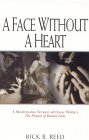
Face Without a Heart, A |
| book fiction
|
|
|
||||||||||||||
Description:
A Modern-day Version of Oscar Wilde's The Picture of Dorian Gray.
Amidst a gritty background of millennial urban nihilism, a young man bargains his soul away, while his painfully beautiful holographic portrait mirrors his each and every sin, each nightmarish step deeper into depravity...even cold blooded murder. This is a trip that explores of the darkest sides of greed, lust, addiction and violence.
|
Qvamp says: This is a direct modern retelling of The Picture of Doran Gray. As such, its plot is a direct parallel to the original. One of the main characters is a drag queen, another is a male artist who is deeply in love with Gary Adrion. Gary himself does sleep with boys occasionally, as they are another vice to explore. This item won a 2000 Queer Horror award. |
|
Read it? Want others to know what you thought of it, then rate this book
Want to buy it?
When a relative traveled to Costa Rica last year for a face lift, (apparently there's a clinic there that is the facility of choice for aging flight attendants, plus they do the job for about half what you'd pay in these United States), I was appalled by the vanity of the act. For about thirty seconds. After all, it's better to spend a few grand than do something really reckless - like sell one's soul - in the quest to derail the relentless march of crows feet. With A FACE WITHOUT A HEART, Chicago novelist Rick R. Reed shows the dangers of exorbitant vanity by putting a grisly, twenty-first-century spin on Oscar Wilde's Victorian novella, The Picture Of Dorian Gray. Reed starts with the anagramatically named Gary Dorian, a 19-year-old Adonis who has the ability to suck people into his orbit like a black hole. So it is that Liam Howard, a
gay artist who specializes in 'hologram hallucinations' happens to follow Gary down the street one day, trailing him east from the Belmont El stop. Liam convinces the incandescent Gary to sit for a hologram, and commences to create one of the best works of his artistic career. Just as the portrait aged while Dorian cavorted in Wilde's novel, the hologram becomes slowly monstrous while Gary cats his way through life in A FACE WITHOUT A HEART. The homoerotic subtext that ripples through Wilde's original story is put at the blazing forefront of this story. Gary's initial corrupter is Henrietta, a gorgeous drag queen for whom beauty is as necessary as oxygen. It is Henrietta who takes the callow Gary and shows him the delights of hedonism. As did Dorian, Gary displays a pansexuality that grows increasingly nihilistic and voracious as he accumulates years. His hologram wastes away, develops lesions and drips blood, the eyes turning a cloudy yellow. Gary, of course, remains pristine. At least his flesh does. Reed's got a knack for presenting the gruesome lower depths of a soul and a body. His descriptions of Liam's holographs and the underground playgrounds of raves, pills, syringes and orgies that Gary frequents contain plenty of voyeuristic thrills. But despite its lengthy detailing of soulless sensual escapades, A FACE WITHOUT A HEART is, at heart, a deeply moral book. And in the end, evil never wins.
From Hellnotes Book Review by Hank Wagner
The subtitle, 'A Modern-day Version of Oscar Wilde's The Picture of Dorian Gray' really says it all. In Rick Reed's version, Dorian Gray is Gary Adrion and artist Basil Howard is Liam Howard. Lord Henry Wotton, the Oscar Wilde analog from Dorian Gray, becomes drag queen Lady Henrietta Wotton (I don't know enough about Reed's proclivities to judge whether there is any other message). Here, Gary's visage is recreated holographically, resulting in an image so exquisite that he jokingly offers his soul in return for a promise to look like that forever. Of course Gary gets his wish, and soon after the hologram begins to
display the ravages of his excessive lifestyle while he remains unscathed. Like Gray, Adrion finds and loses love, but the object of his affection is an
exotic dancer rather than an actress. Gary's unjustified rejection of the dancer launches him into a life of reckless depravity, one filled with meaningless sex, copious drug use, and even murder. Much like that of his predecessor, the utter emptiness of that life eats at the fabric of his soul, causing him to loathe his existence, and eventually, to destroy the source of his eternal youth. Reed does
himself, and his excellent source material proud, masterfully juggling multiple viewpoint characters for maximum effect. Each has a distinctive voice, providing a different, but illuminating perspective on the events described. Like Wilde's story, Reed's is at heart a commentary on contemporary life, a mirror held
up to catch the images cast by the dark side of modern existence. Like the best books, Reed's goes beyond its narrow subject matter to invite reflection on deeper patterns of human behavior, in this instance, the self-destructive impulses we all must grapple with and master if we wish to stay sane. As such, it constitutes a penetrating morality tale, a trip into the very heart of darkness.
© QueerHorror.com 1999-2006. Any suggestions, questions or comments, please e-mail us